
Dans les systèmes d'orientation des hôpitaux universitaires, des panneaux en PVC coloré permettent de créer des systèmes de navigation efficaces grâce à la combinaison de propriétés antibactériennes et de technologies de guidage visuel. Un hôpital utilise des panneaux en PVC de qualité médicale pour la signalétique des services. Ces panneaux présentent des reliefs tridimensionnels de 0,3 mm sur le texte, obtenus par moulage par injection bicolore, associés à un revêtement antibactérien aux ions d'argent. Ce procédé permet d'atteindre un taux d'inhibition bactérienne de 99,2 % tout en répondant aux exigences de lecture sans obstacle. Dans les services de pédiatrie, des panneaux colorés interchangeables, ornés de personnages de dessins animés, sont utilisés. Grâce à leur structure magnétique, ils permettent de changer rapidement de thème pour les fêtes, réduisant ainsi l'anxiété des enfants de 37 %.
Dans les chambres d'hôpital, des panneaux en PVC coloré optimisent les effets thérapeutiques grâce à des technologies de régulation de la lumière. Un service d'oncologie utilise des films pour fenêtres en PVC à transmission lumineuse ajustable (de 0 à 100 %) grâce à la technologie électrochrome, associée à des traitements de diffusion de la lumière en surface pour éliminer l'éblouissement. Lorsque les patients ont besoin de se reposer, les films passent automatiquement à une teinte jaune chaude, simulant le spectre du coucher de soleil ; pendant les séances de traitement, ils deviennent blancs froids afin de maintenir un espace clair. Les données cliniques montrent que cette conception a amélioré la qualité du sommeil des patients de 28 % et réduit la perception de la douleur de 19 %.
In commercial scenarios, PVC colored panels, through the synergy of color psychology, light-shadow interactions, and three-dimensional modeling, have become dynamic carriers of brand culture and spatial atmosphere. Their application depth has extended from basic decorative layers to strategic-level spatial design, forming a complete set of aesthetic solutions for commercial spaces black foam pvc sheet.
1. Immersive Experience Construction in Retail Terminals
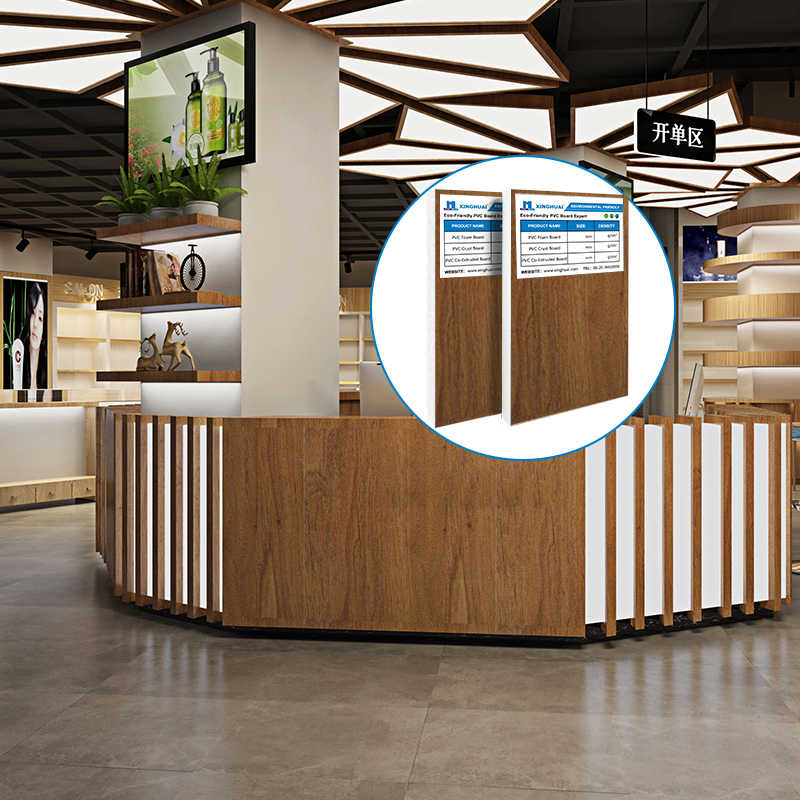
In high-end retail stores, PVC colored panels create narrative-driven spatial scenarios through CNC cutting and laminating processes. A flagship store of a black foam pvc sheet luxury brand uses 8mm-thick matte white base panels, which are CNC-carved with the brand's iconic patterns to create perforated partitions. These partitions are paired with adjustable-color-temperature LED light strips inside. During the day, they present a soft diffuse reflection effect, while at night, they project dynamic light and shadow displaying the brand's historical images through. This design not only enhances the spatial hierarchy but also transforms the product black foam pvc sheet display area into an immersive brand experience venue through the combination of material translucency black foam pvc sheet and color changes.
Fast-fashion brands place greater emphasis on the rapid replacement capabilities of PVC colored panels. A chain brand adopts a modular PVC display rack system, using magnetic colored panels for weekly theme changes. Designers convert the season's popular colors into gradient color matrices, paired with rotatable three-dimensional display stands, black foam pvc sheet creating a visual illusion of color flow as consumers move. This dynamic display method has increased store foot traffic by 30% and extended the average停留时间 (dwell time) for individual products to 2.2 times that of traditional models black foam pvc sheet.
2. Spatio-Temporal Narrative Media in Cultural Exhibitions
In museums and themed exhibition halls, PVC colored panels, through precise control of material transparency and color saturation, have become important technical black foam pvc sheet supports for historical narratives. A history museum uses double-layer PVC panels to create a timeline exhibition wall. The inner layer is a semi-transparent frosted panel with UV printing presenting key nodes of historical events, while the outer layer is a transparent colored panel with laser-engraved symbolic patterns related to the events. When visitors approach, built-in sensors trigger light changes, projecting the colored patterns onto the inner exhibition panel, creating a virtual-real narrative scenario black foam pvc sheet. This design enables complex historical information to be visually translated through color hierarchies and light-shadow interactions.
Corporate exhibition halls emphasize the engineering integration capabilities of PVC colored panels. A technology company uses fire-resistant B1-grade PVC panels to create interactive exhibition walls, achieving 20-meter seamless splicing through hot-melt welding processes and reaching an IP65 protection rating with surface nano-coating treatments black foam pvc sheet. The exhibition walls integrate capacitive touch sensors inside. When visitors touch different areas, the corresponding PVC panels change color through electrochromic technology, simultaneously triggering AR projections to display product technical details. This technological integration has enabled the exhibition hall to handle over 500 daily visitors, with an information retention rate increased to 82% black foam pvc sheet
In educational scenarios, PVC colored panels, through the in-depth integration of safety performance, modeling capabilities, and educational functions, have become key materials for constructing age-appropriate learning environments. Their applications have transcended traditional teaching aids, forming a complete educational support system black foam pvc sheet covering spatial design, curriculum tools, and psychological interventions black foam pvc sheet.
1. Sensory Enlightenment Systems in Early Childhood Education
In childcare institutions, PVC colored panels construct multi-dimensional sensory enlightenment environments through the coordinated stimulation of tactile, visual, and spatial cognition. An international kindergarten uses E0-grade environmentally friendly PVC panels to create activity area partitions, which are thermally bent into spherical black foam pvc sheet perforated devices with a diameter of 800mm. Inside, colored panels with different textures (such as velvet, silicone, and wood grain) are embedded. When toddlers touch them, the devices generate slight black foam pvc sheet vibrations through built-in motors, creating cross-sensory feedback with color black foam pvc sheet changes. This design has increased participation in spatial cognition courses by 45% and raised the excellent rate in tactile sensitivity tests to 78%.
In the field of teaching furniture design, PVC colored panels demonstrate strong morphological adaptability. A primary school adopts a transformable PVC desk system, where the desktop is a composite of 3mm-thick colored panels and magnetic whiteboards, black foam pvc sheet adjustable in angle from 0 to 90 degrees through hinge structures. The sides of the desk integrate detachable PVC storage boxes with transparent and semi-transparent color combinations, facilitating teachers to observe item storage while training students' organizing abilities through color classification. Pilot class data shows that this design has improved classroom order scores by 22% and reduced item loss rates by 63%.
2. Intervention Support Systems in Special Education
In rehabilitation centers for children with autism, PVC colored panels, through the combination of color psychology and behavioral intervention technologies, have become important environmental treatment tools. Designers use low-saturation Morandi color schemes to create space zoning panels, defining different functional areas through color brightness differences. In the emotional regulation room, gradient blue PVC panels are used to create adjustable light-transmitting curtains, paired with an built-in aromatherapy system. When anxiety is detected in children, the system automatically black foam pvc sheet reduces color saturation and releases lavender aroma. This design has reduced the frequency of emotional outbursts by 54% and increased participation in rehabilitation training to 89%.
In vocational education, greater emphasis is placed on cultivating practical engineering abilities with PVC colored panels. A vocational automotive repair training room uses fire-resistant and oil-resistant PVC panels to create simulated car bodies, enabling rapid color panel replacement for teaching different vehicle models. The panel surfaces are textured to resemble metal, paired with a magnetic parts positioning system, allowing students to obtain realistic operational feedback during disassembly and assembly exercises while avoiding damage to real vehicles. Pilot data shows that this design has reduced training equipment maintenance costs by 72% and increased student skill certification pass rates to 91%.
III. Public Spaces: Value Carriers of Practical Aesthetics in Society
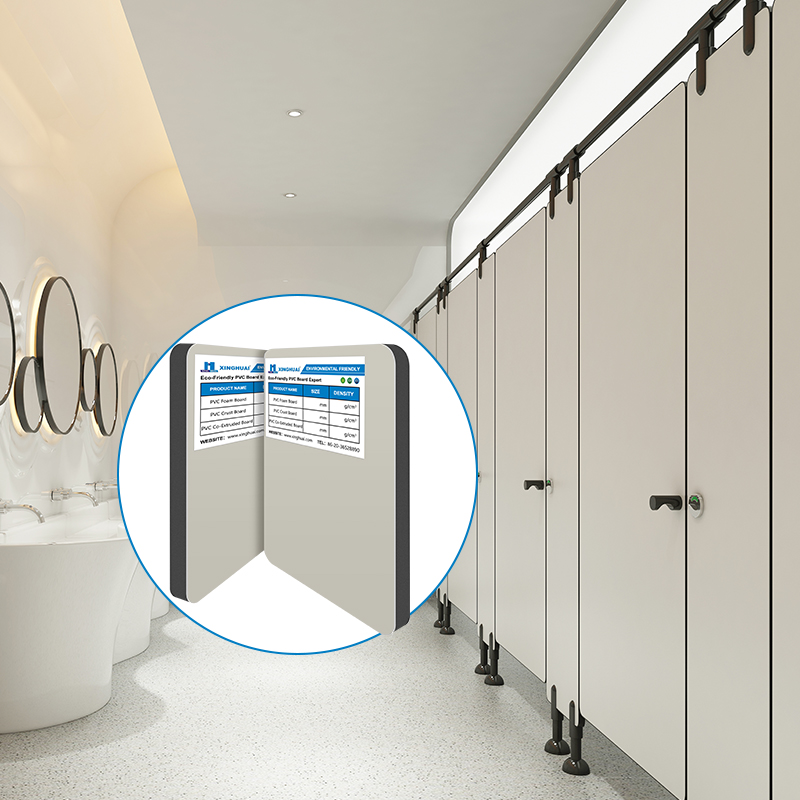
In public building decoration, PVC colored panels, through the balance of functional integration and aesthetic innovation, have become cost-effective choices for enhancing urban space quality. Their applications have extended from basic decorative layers to social service functions, forming spatial solutions with public value.
1. Therapeutic Environment Creation in Medical Settings
In the wayfinding systems of tertiary hospitals, PVC colored panels construct efficient navigation systems through the combination of antibacterial properties and visual guidance technologies. A hospital uses medical-grade PVC panels to create department signboards, with 0.3mm three-dimensional protrusions on the text through double-color injection molding, paired with silver ion antibacterial coatings on the surface, achieving a 99.2% bacterial inhibition rate while meeting barrier-free reading requirements. In pediatric areas, replaceable cartoon character colored panels are used, enabling rapid theme changes for festivals through magnetic structures, reducing the fear index in children by 37%.
In ward decoration, PVC colored panels enhance therapeutic effects through light environment regulation technologies. An oncology department uses light-adjustable PVC window films, achieving 0-100% light transmittance adjustment through electrochromic technology, paired with surface light diffusion treatments to eliminate glare. When patients need rest, the window films automatically switch to a warm yellow tone, simulating the sunset spectrum; during treatment periods, they switch to a cool white tone to maintain a clear space. Clinical data shows that this design has improved patient sleep quality scores by 28% and reduced pain perception by 19%.
